

Inflammatory markers can double within six hours of eating a pro-inflammatory meal. Which foods are the worst?
Excessive inflammation may play a role in a number of leading causes of death and disability, including type 2 diabetes, obesity, and heart disease. “But what are the stimuli that jumpstart the destructive inflammatory cascade?” You typically hear about the pro-inflammatory nature of a chronic high-fat diet, but the inflammatory effect “may not be limited to chronic intake but may be evident after the consumption of a single meal.”
Within hours after eating an unhealthy meal, inflammatory markers like interleukin-6 (IL-6) can skyrocket, doubling within six hours. The majority of studies show an increase in IL-6 after consuming a high-fat meal. But the meals they tested weren’t just filled with meat, eggs, dairy, and oil, but also junky refined carbohydrates like white flour and added sugar.
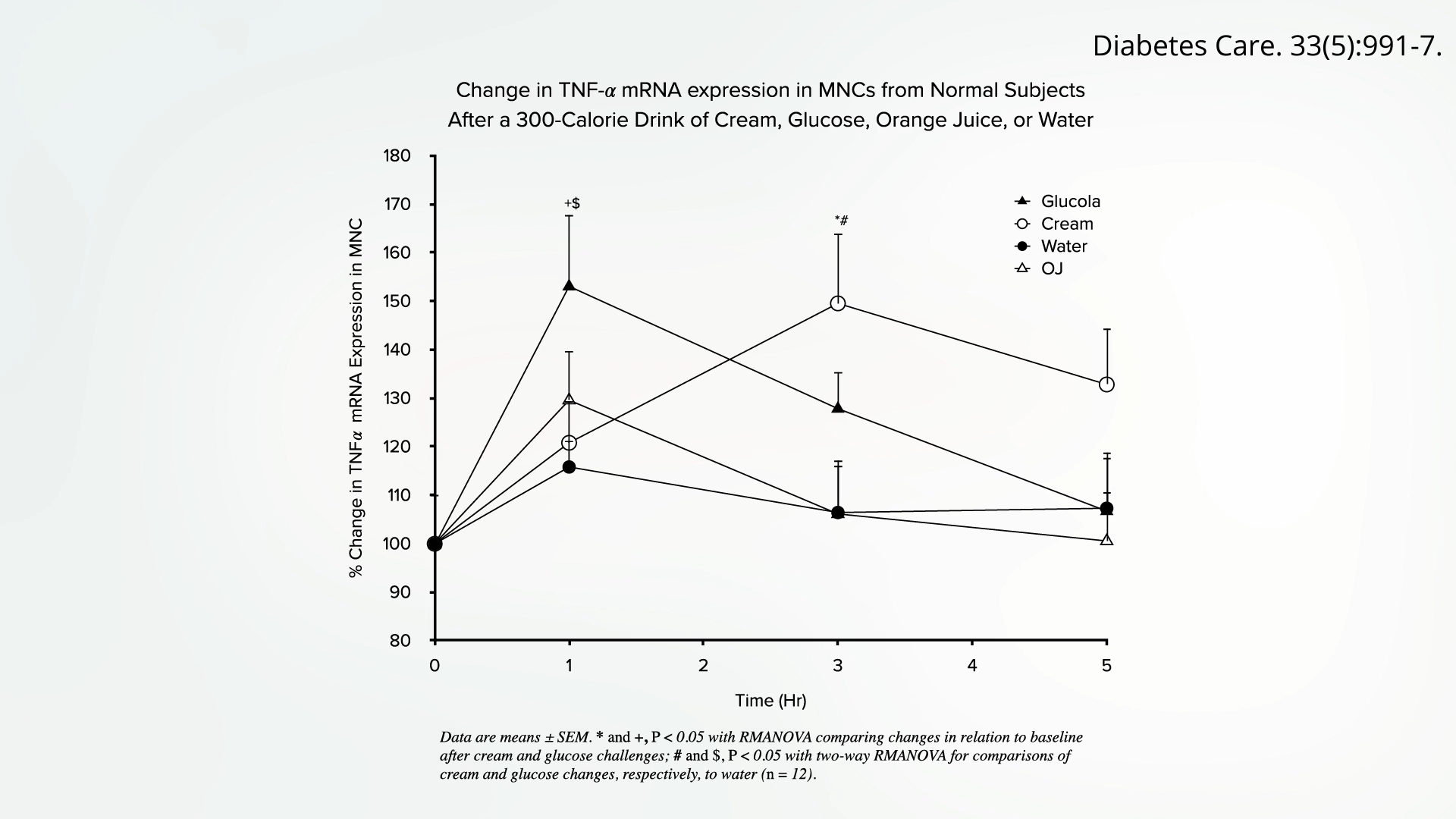
When people are given essentially straight butter fat and no carbs, they can still get a spike in inflammation within hours, proving the added fat itself is pro-inflammatory. But when people are given straight sugar water without any fat, the result is the same, proving the added sugar is pro-inflammatory, too, as you can see below and at 1:26 in my video Foods That Cause Inflammation.
Why should we be concerned with the inflammatory responses after unhealthy meal ingestion? Because extensive research points to the idea that “persistent low-grade inflammation is an underlying factor in several high-mortality chronic diseases and that diet can contribute to, or attenuate, that inflammation.”
You’ll note in the graph below that IL-6 levels jumped up to about 3 pg/mL after the meal. (You can also check it out at 1:55 in my video.)
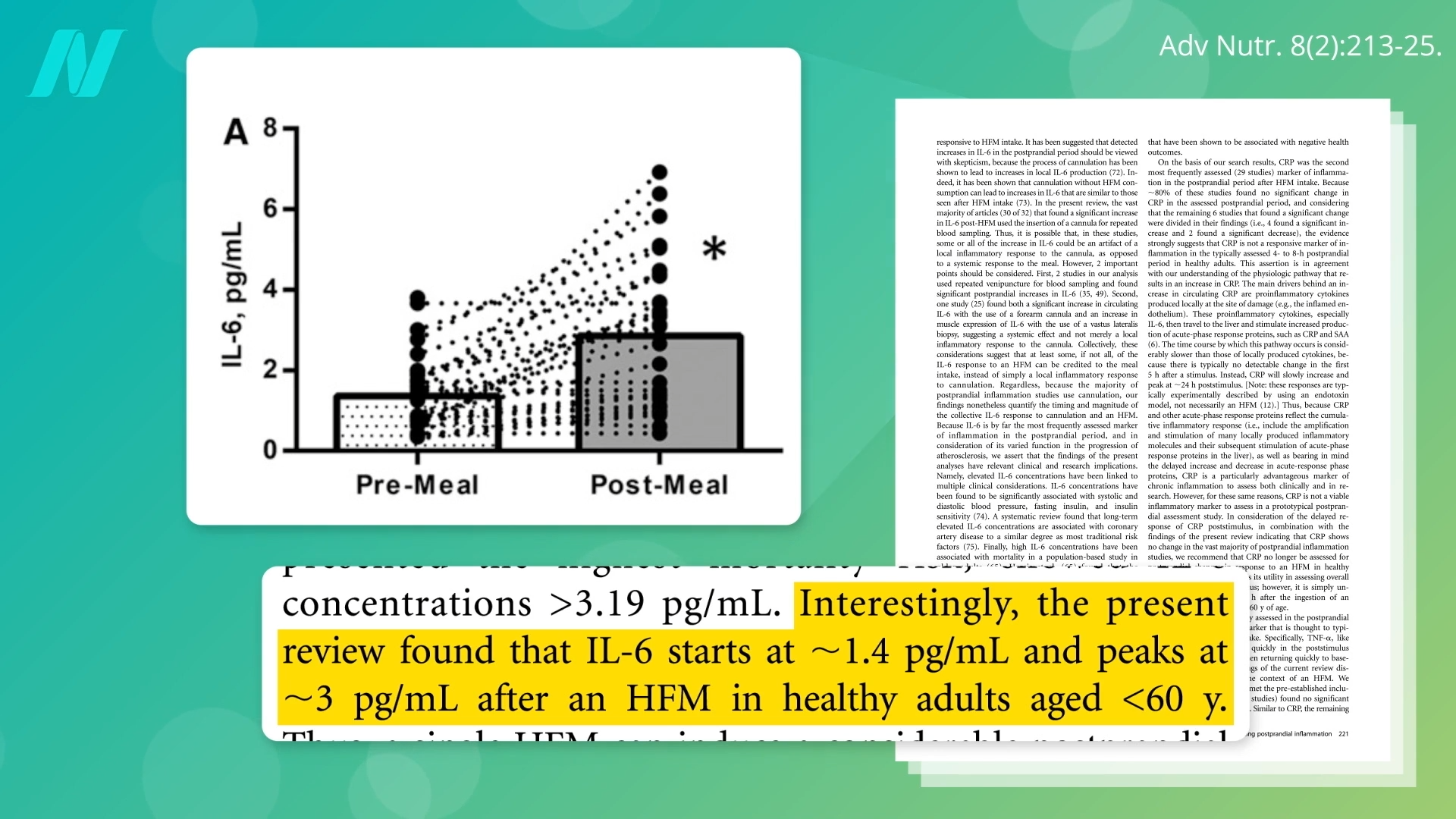
When levels start regularly getting up to about 3 pg/mL, that’s associated with twice the risk of death. That increased risk was found across the board, compiling eight other similar studies, likely because it’s linked with increased risk of heart disease, the number one killer of men and women, even as strongly as some other major well-known risk factors like high cholesterol.
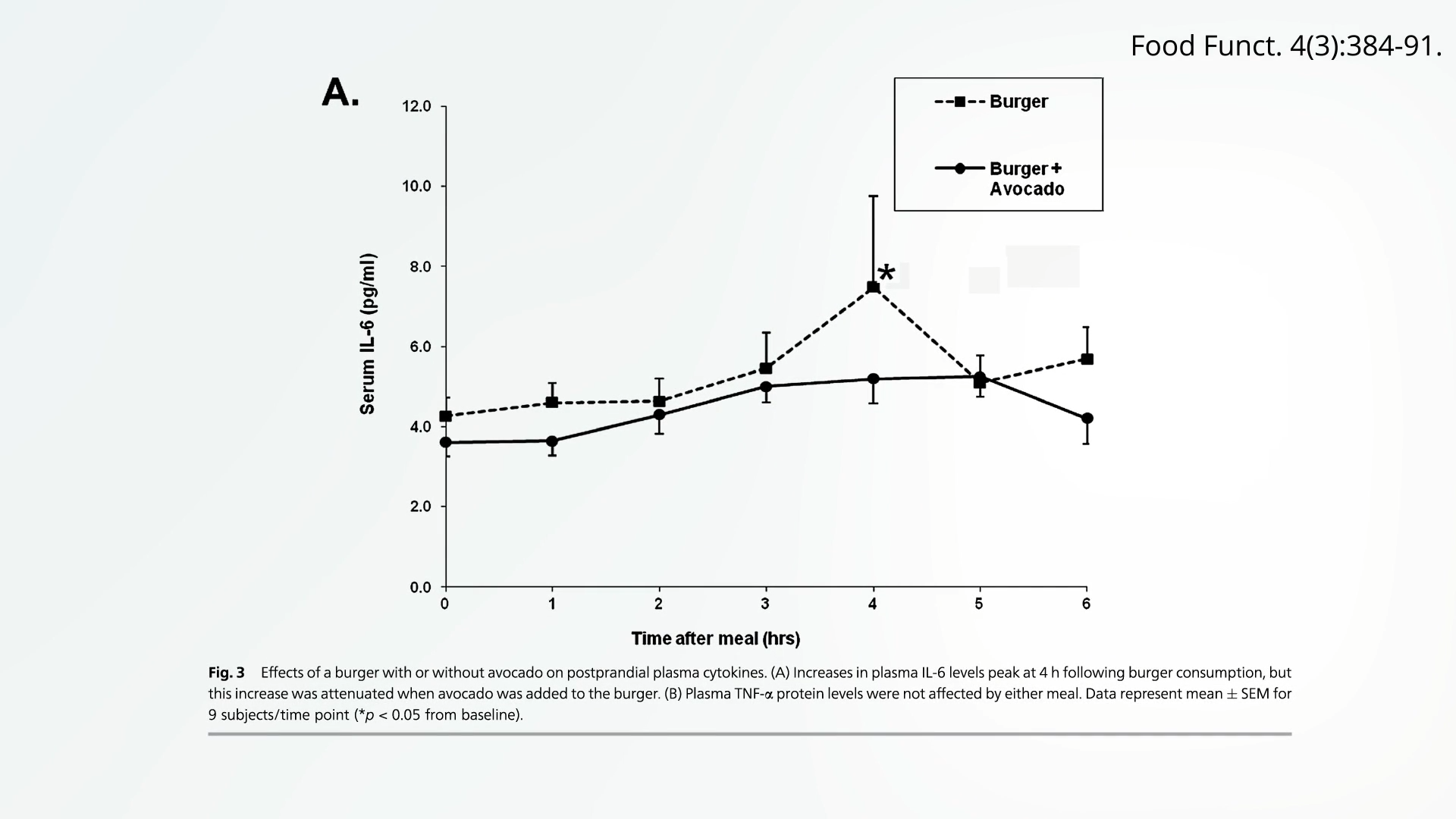
Now, not all high-fat foods cause inflammation. More than a dozen studies combined show that whole plant foods such as nuts do not increase inflammatory markers, even when eating up to handfuls of nuts a day. In fact, spread half an avocado on a beef burger, and you may be able to blunt some of the inflammation caused by the meat—even lean meat—as you can see below and at 2:35 in my video.
There are reviews purporting to show a drop in inflammatory markers after eating wild game, which is about as lean a meat as you can get, but that’s only compared to store-bought meat. Give people some really fatty meat and their IL-6 shoots up, as do their tumor-necrosis factor and C-reactive protein. Inflammatory, inflammatory, inflammatory—within hours of consumption. But what if you instead eat a kangaroo steak, which is extremely low in fat, similar to elk or moose? You’ll get the same strong inflammatory response within hours of eating it, as you can see below and at 3:15 in my video.
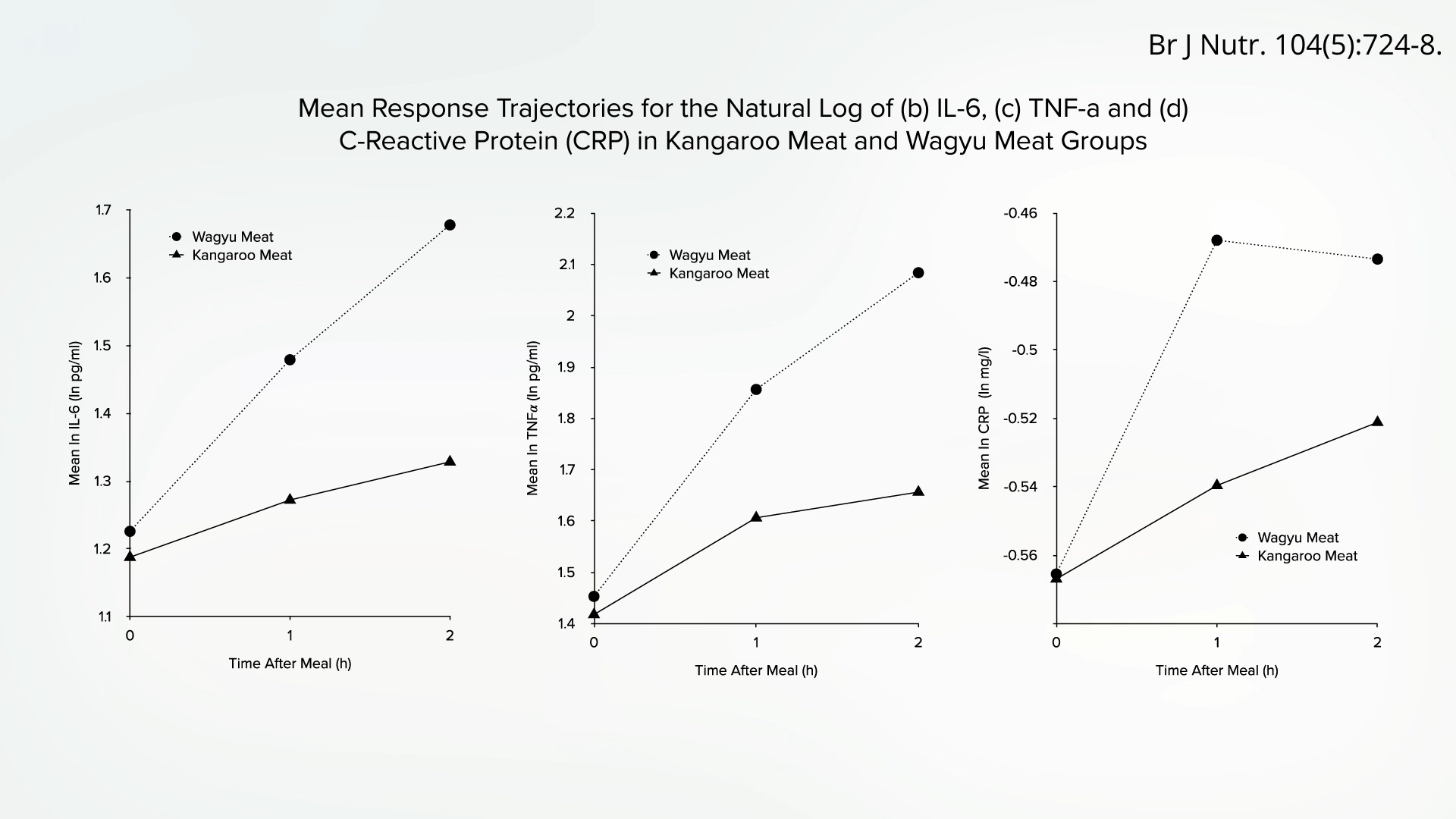
Now, certainly less inflammatory than conventional meat you might get at the store, but pro-inflammatory nonetheless, increasing markers of inflammation within mere hours.
Doctor’s Note
Stay tuned for Which Foods Are Anti-Inflammatory?, up next.
For more on diet and inflammation, see related posts below.