


What began as a line of storms moving across a strong cold front became one of the most disruptive rain events North Georgia has seen in months.
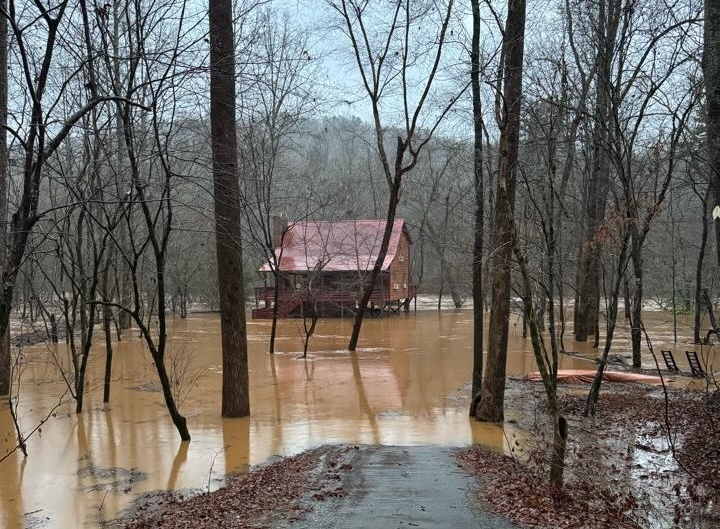
Between Friday night and Sunday, between 2 and 6 inches of rain fell across the region, with the heaviest totals stretching from north of Dawsonville to Batesville. In the mountains, rapid runoff poured into creeks, rivers and drainage systems, pushing water out of banks and across roadways.
Along the Soque River north of Clarkesville, water surged past Mark of the Potter, turning the normally scenic stretch into a fast-moving torrent.
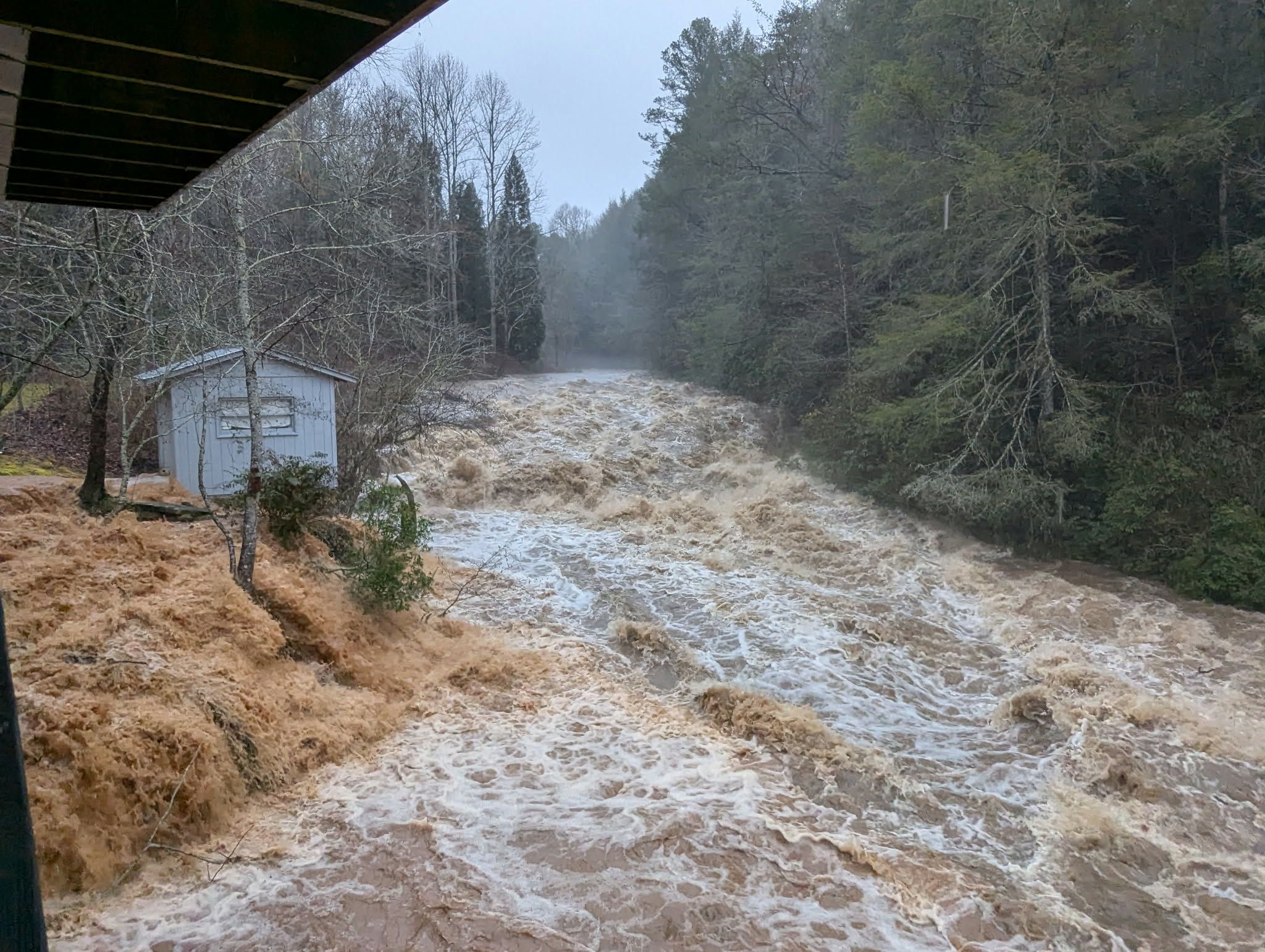
By Saturday morning, flooding was already spreading from White and Lumpkin counties into the Soque and Chattahoochee river basins, overwhelming culverts, washing out driveways and forcing emergency responders into high-water rescues.
Flooding was also recorded along Georgia 17 in Sautee Nacoochee and on the Chattahoochee River in Helen, where video showed the river roaring through town.
White County saw the most severe impacts
In White County, emergency crews responded to more than a dozen flooding-related calls between 9:44 a.m. and 3:56 p.m. Saturday. Officials later confirmed that 4.75 to 6.5 inches of rain fell in a short time, creating dangerous runoff from higher elevations.
Creeks and drainage systems failed across Helen, Cleveland, and rural parts of the county, flooding roads, collapsing driveways, and clogging culverts with storm debris.
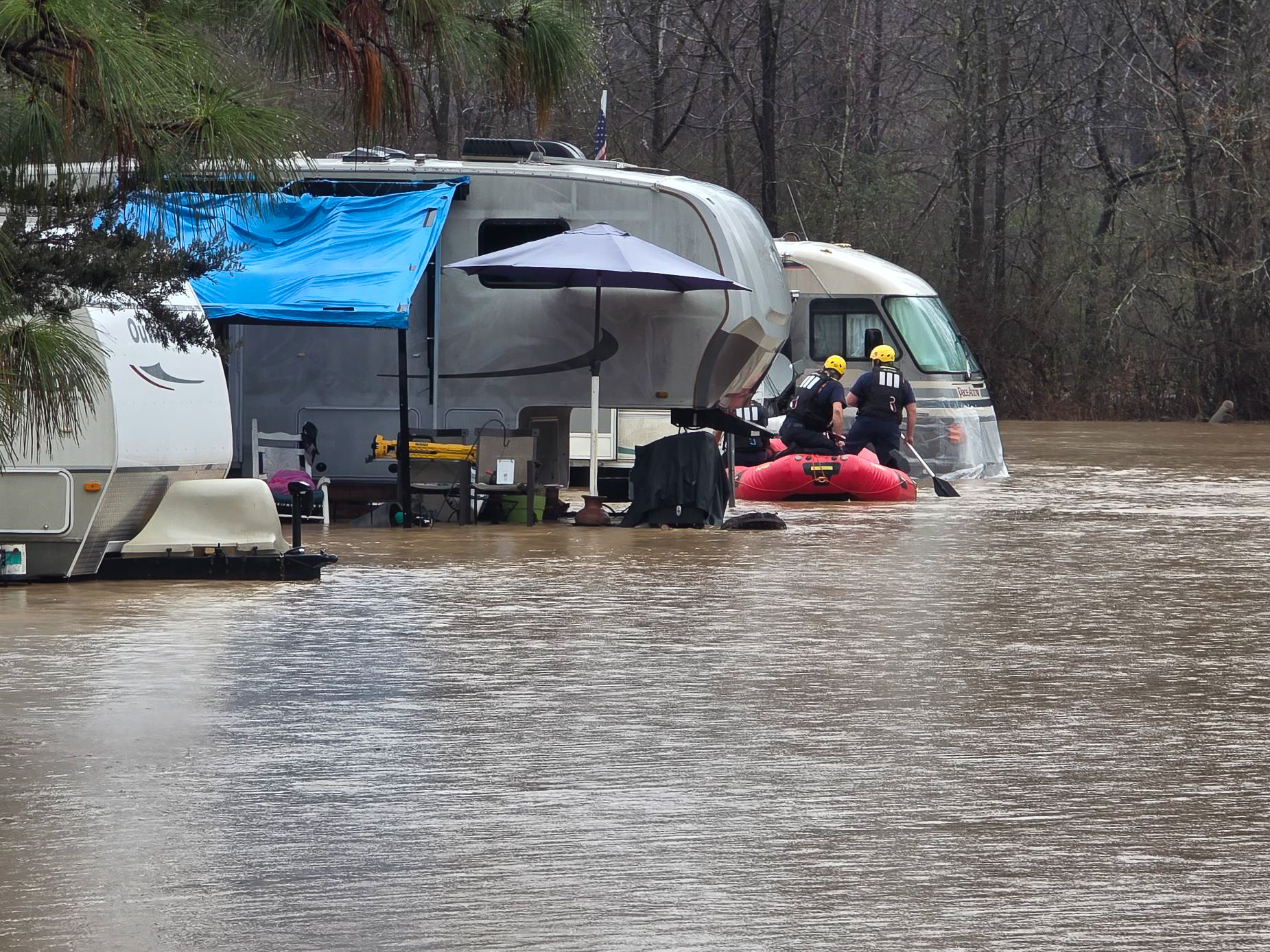
One of the most serious situations unfolded at a camper park on Asbestos Road, where rising floodwaters trapped people inside their campers. A swift-water rescue team was sent in, and one person was taken to the hospital with minor injuries. The area was secured and residents were told to stay away until the water receded.
Floodwaters also blocked access to the Yonah Preserve recreation complex, temporarily stranding families at the facility. White County officials provided food and drinks while people sheltered in place until it was safe to leave.
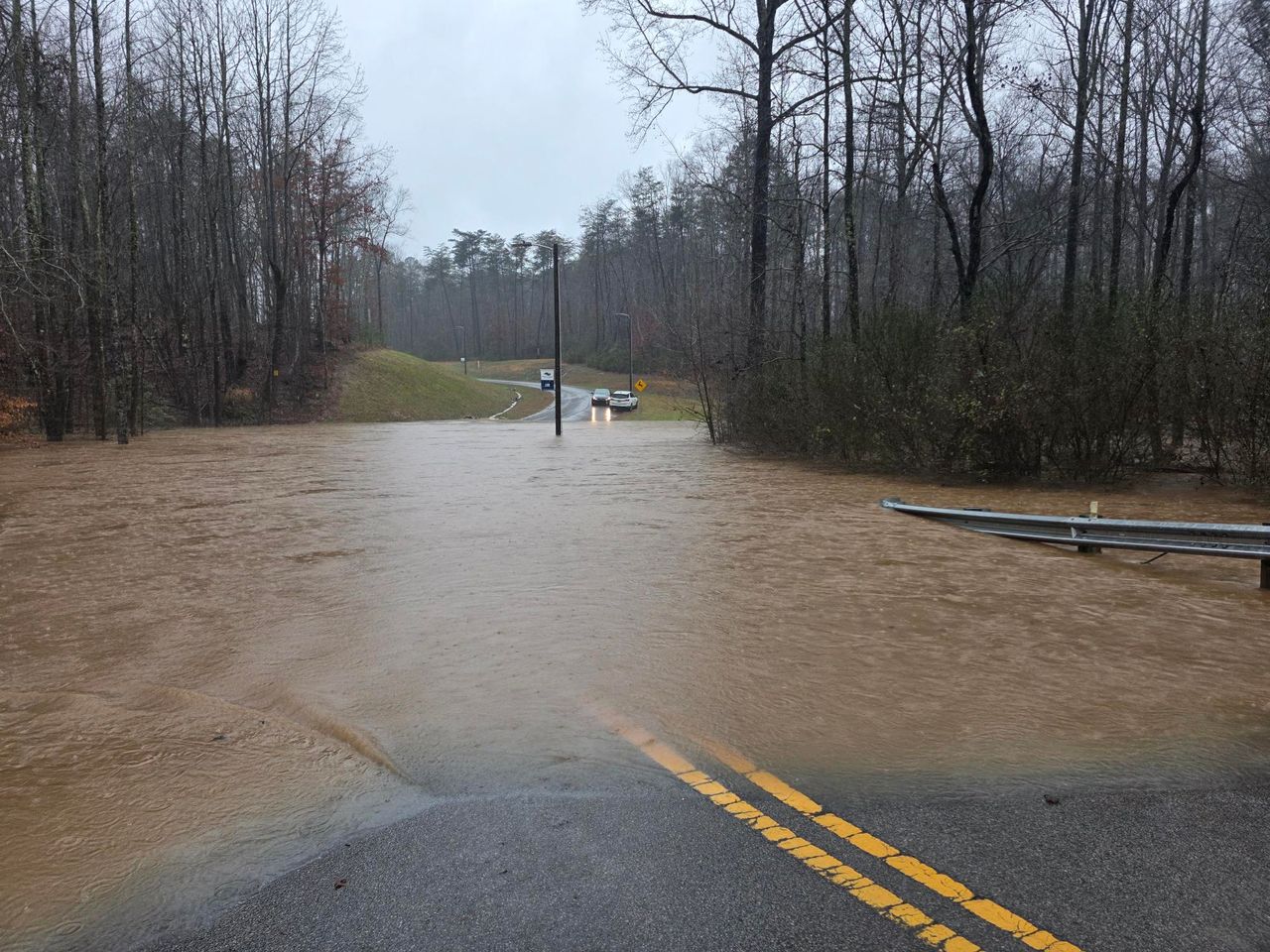
“Once the torrential rain reached a critical point at Yonah Preserve, we asked the remaining people at the recreation center to shelter in place,” Commission Chairman Travis Turner said. “We were able to provide meals and give the children the opportunity to play in the gym while the rain stopped and the creeks began to recede.”
By mid-afternoon Saturday, water levels began to fall, and road crews worked to reopen routes as conditions improved.
Lumpkin County roads washed over
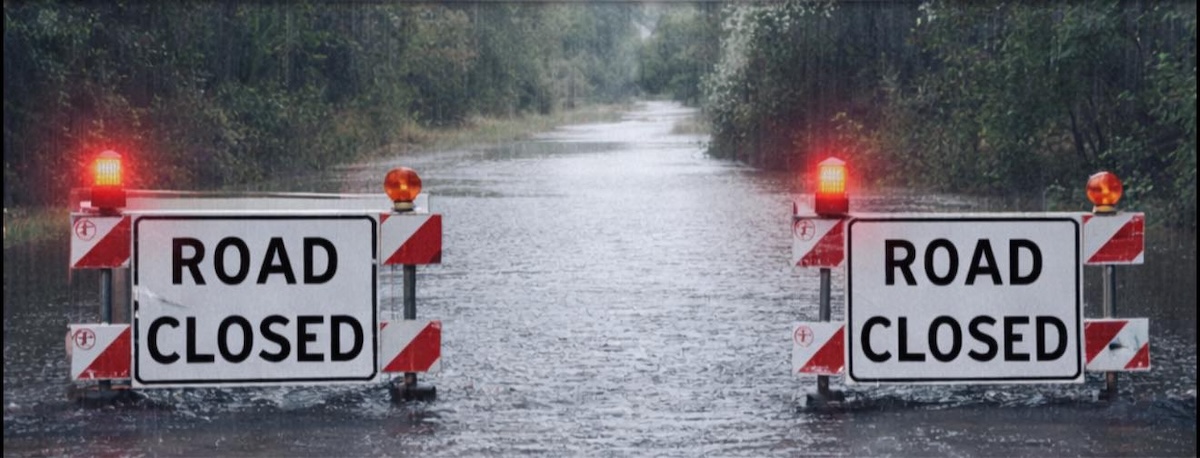
In Lumpkin County, water flowing off the mountains flooded and closed multiple roads as conditions deteriorated through the day.
Sheriff’s officials shut down Horton Road, Walnut Valley Drive at Black Mountain Road, Dawsonville Highway, Silom Church Road, Davis Chapel Road and Cavender Creek Road as water crossed pavement and made travel unsafe.
Most routes reopened later Saturday, but Willow Pond Road near U.S. 19 North remained closed into Monday, with access only from the Porter Springs Road side while crews monitored lingering damage.
Winds added to the damage
As the rain moved out, strong winds followed behind the system. Gusts reached 25 to 30 mph outside the mountains, with up to 35 mph at higher elevations. While most tree damage was reported farther west in Coweta County, officials said the gusty conditions contributed to downed limbs and isolated power outages across parts of North Georgia.
What the storm left behind
By Monday, emergency officials across the region confirmed that no fatalities were reported, and all known rescues and emergency calls had been resolved. Damage assessments and documentation were ongoing as counties reviewed washed-out roads, damaged driveways, and clogged drainage systems.
The rain also erased much of the region’s lingering drought, but it came at a cost.
Emergency managers said the weekend storm served as a reminder of how quickly mountain rainfall can become dangerous, especially when creeks, culverts, and rivers rise faster than people expect. Even as water levels dropped, officials continued urging caution, as it only takes a few inches of fast-moving water to turn a road into a life-threatening hazard.
SEE ALSO


