


The 30 of us stumble down the Anna Ruby Falls path in the dark, in search of a unique Appalachian treasure: Orfelia fultoni, which has no particular English translation.
The Latin-named bugs are a species of gnat that shows up in our parts from May to July, only in Georgia and its surrounding Appalachian Mountain states. The larvae (baby gnats) have a devious method of survival: they glow. Tiny passing instincts take an interest in the magical-looking blue-green light, come near, and get snagged by the larvae’s sticky silk threads. It’s not a pleasant fate for the gnats’ dinner.
The hikes originate at the Anna Ruby Falls visitor center on selected nights through June 19, and the hikes are run by knowledgeable guides working for FIND Outdoors, and outside contractor with the National Park Service.
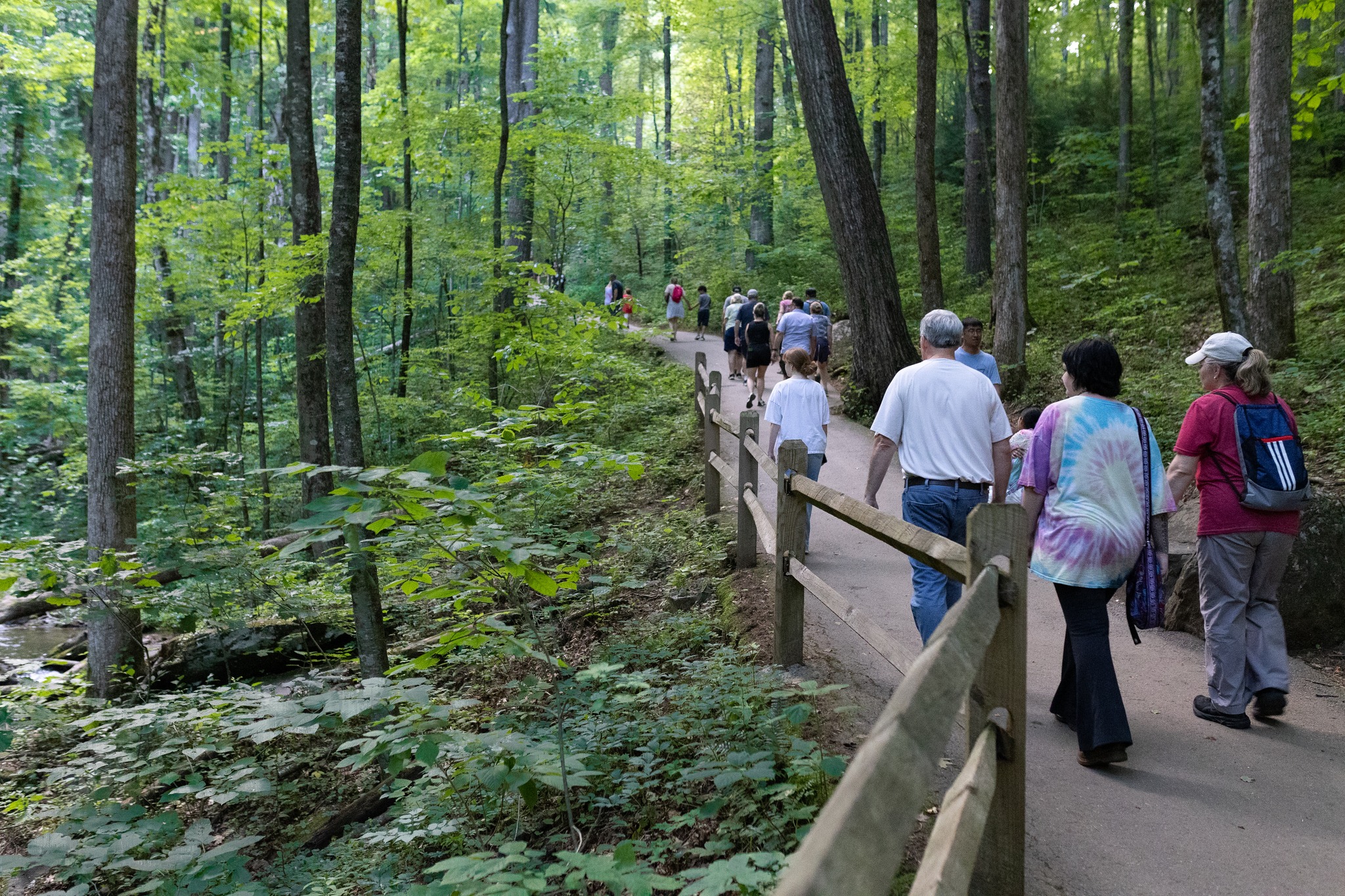
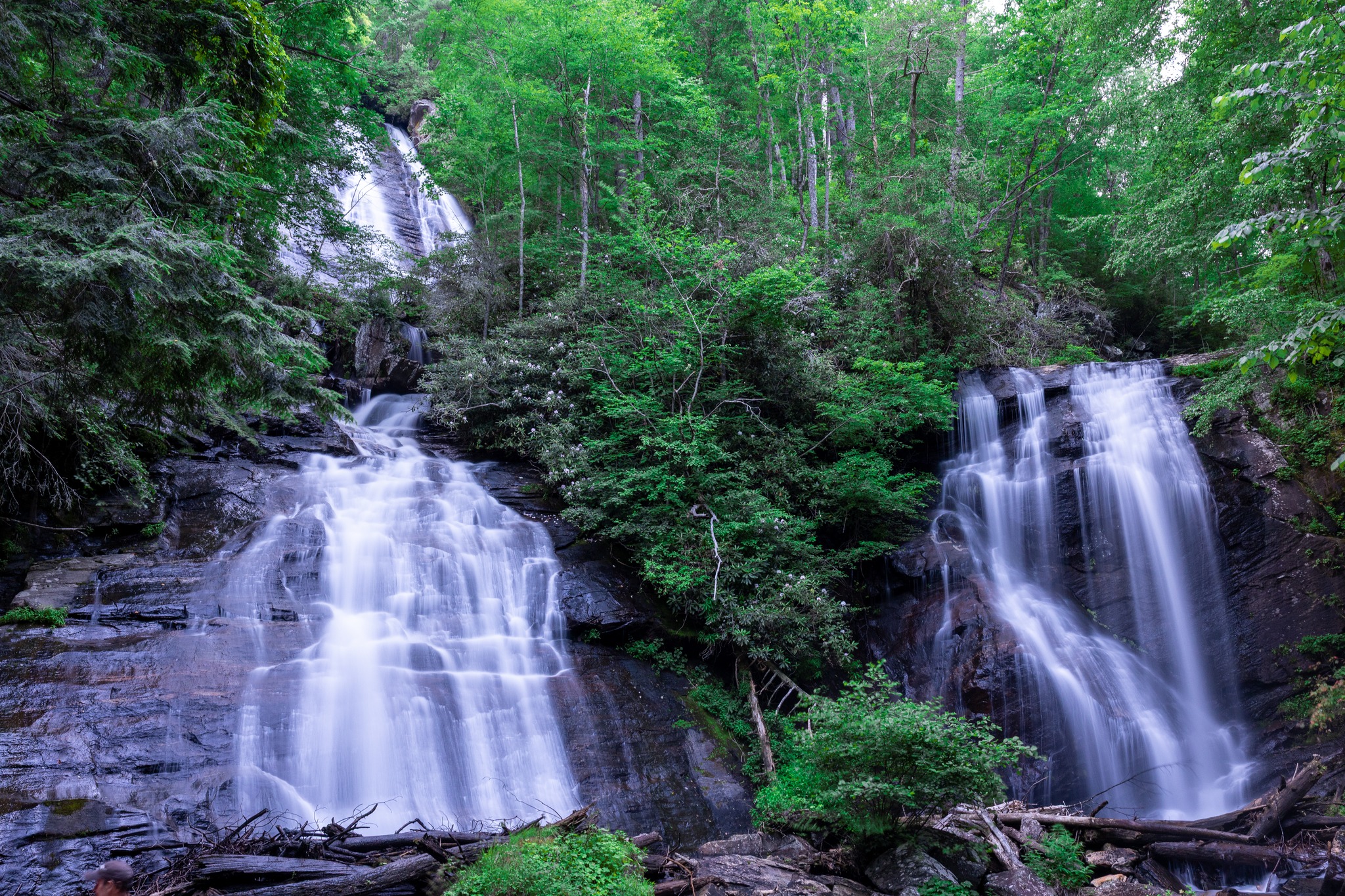
Up to the falls
For the hikers, the evening begins with the steep, .4-mile hike (it feels like much more) up the hill from the visitor’s center beginning around 8, as the sky darkens, to the magnificent waterfalls, where we stop on the viewing platforms. rest, and chat amongst ourselves. We enjoy the rushing falls, learning the Cherokee used to call them “Father and Son,” respectively, falls of about 250 feet and 50.
One of our guides, Christa, is a seasoned naturalist with two degrees in the field. She knows a great deal about the natural habitat of our area, having grown up in Hiawassee, and points out other flora and fauna of interest all around us.
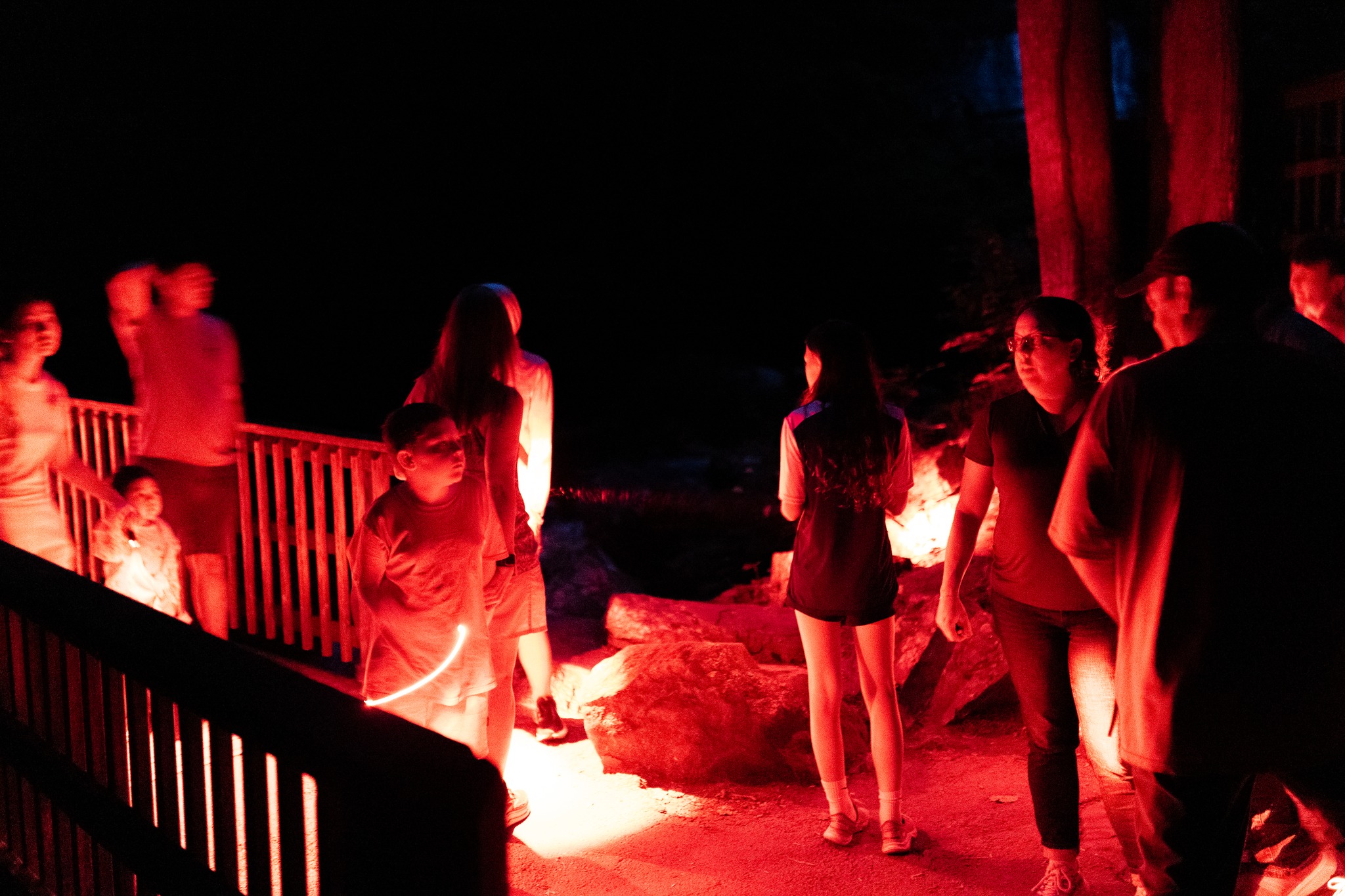
When it’s dark enough, we begin our descent. We are all armed with red-tinted flashlights that help us find our way without disrupting the view.
First, the lightning bugs
Now, we can see that some of Georgia’s many species of lightning bugs are out, and we can readily view them darting among the trees and rocks. There are three-flashers, four-flashers, and “J bugs.” Not terribly imaginative names that illustrate the differences between them. Their colors are mostly in the greenish spectrum, with some leaning toward blue and even yellow. They are just the preamble to the main event, though.
On the ground between and amongst the rocks, we start to see the glowing orfelia fultoni. The little patches of color, scattered here and there, are surprisingly bright. We can’t really see the shape of the larvae themselves; their glow obscures a closer look, and none of them are close enough to touch from the trail (which might not be a good idea anyway).
Gnat bonanza!
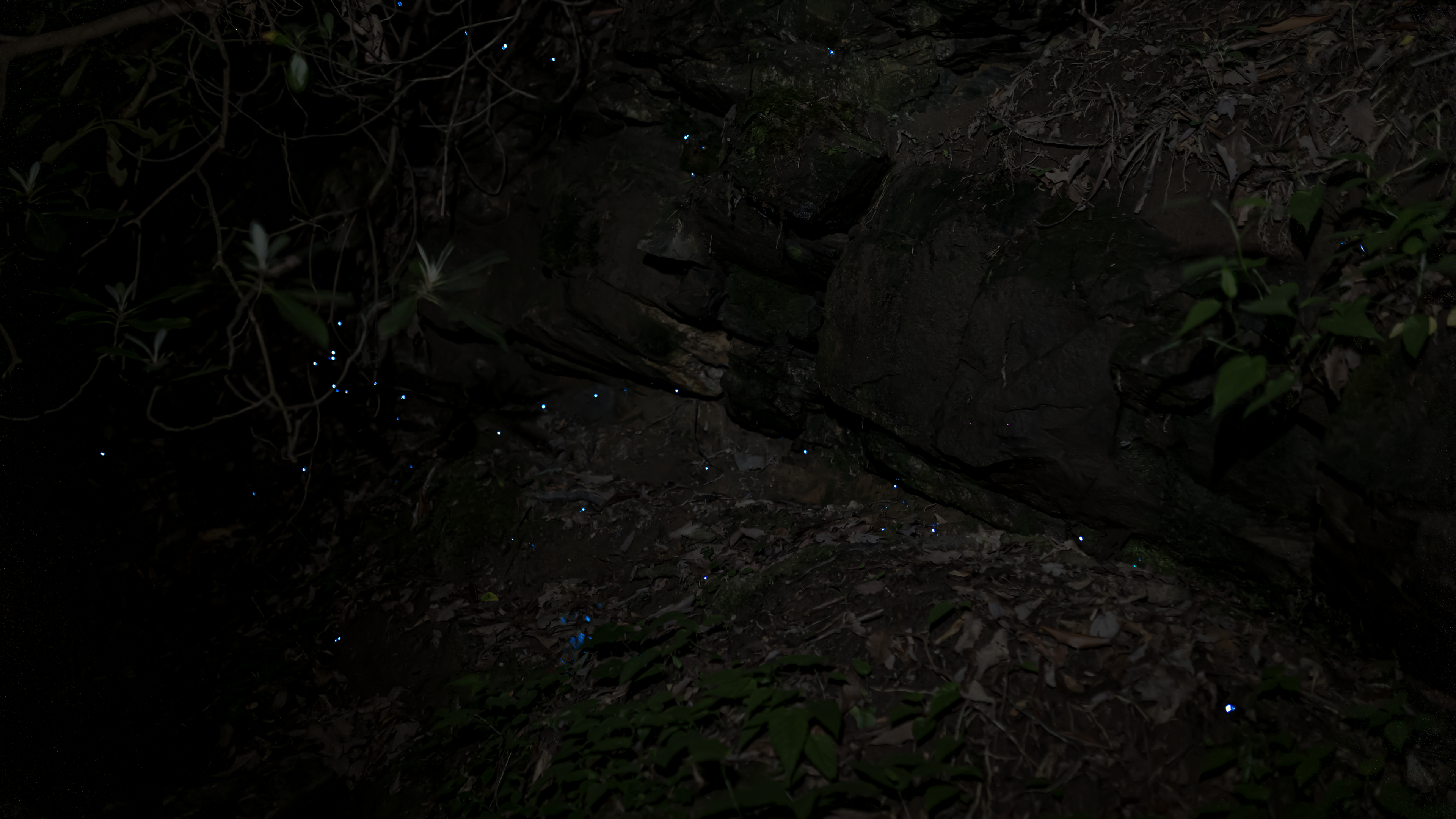
Close to the bottom of the trail, we hit the bonanza: This is the largest patch of the little guys, a few feet from one end to the other, glowing up a storm before our eyes. We’re just 100 yards from where we started, but this, apparently, is their favorite habitat along the trail. Most of our group, who range in age from pre-teens to octogenarians, ooo and ahh at the colorful display.
We return to our cars, stunned by one of nature’s uncustomary delights. Now, the only lights we can see are not inches away, but light years. It’s a good night for stargazing, too.
Fees for the Foxfire hikes are $30 for adults and $15 for youth on weeknights; $40 and $20 on weekends. For more information and to book tours go to the Foxfire Hike website.