


The first centerfire rifle I ever laid hands on was a lever action, a .30/30 Model 94 that was produced in Winchester’s factory less than 20 minutes from my childhood home outside New Haven, Connecticut. It was in a display rack with a dozen identical 94s in a hardware store in town. I was already the proud owner of a Daisy Red Ryder BB gun so I knew how it worked, and the first time I cycled the lever and heard the unmistakable chik-chik sound it made I was hooked. I’ve been under the spell of lever actions ever since.
Lever actions are truly America’s rifle. With all due respect to our iconic bolt actions, the ubiquitous AR, and the Kentucky squirrel rifles of old, the lever gun is the first among equals. And their popularity keeps chugging along, despite the antiquity of the platform.
There are so many things to love about lever actions but, if I’m being honest, they have their drawbacks too. These are the qualities that make them awesome, along with a list of their shortcomings.
Why Lever Actions Are Awesome
- Variety of Chamberings
- Tremendous Versatility
- Unrivaled Nostalgia and Heritage
- Exceptional Beauty and Elegance
- Fine Balance And Handling
- Sleek and Portable
- New Hunting Opportunities
- Legal Everywhere
- Plentiful Sight Options
Why They Suck
- Outdated Stock Geometry
- Limited Range
- More Difficult to Accessorize
- Magazine Limitations
- Loading Difficulties
- Crossbolt Safeties

Reasons They Are Awesome
Let’s start with the things I like best about lever actions, which (spoiler alert) vastly out weight the downsides mentioned later on.
Variety of Chamberings
When the lever action first came on the scene the types of cartridges it could accommodate were limited. Round-nosed lead bullets in stovepipe cases were the only option. And, before the Winchester 1886 arrived, the strength of the actions could only handle so much oomph.
Innovations like the Savage 99s rotary magazine, and the incorporation of detachable box magazines more recently, have widened the field of offerings.
Lever actions are chambered in everything from plinking-friendly rimfires to traditional pistol cartridges and heavy-hitting dangerous game rounds — even modern cartridges like the 6.5 Creedmoor.
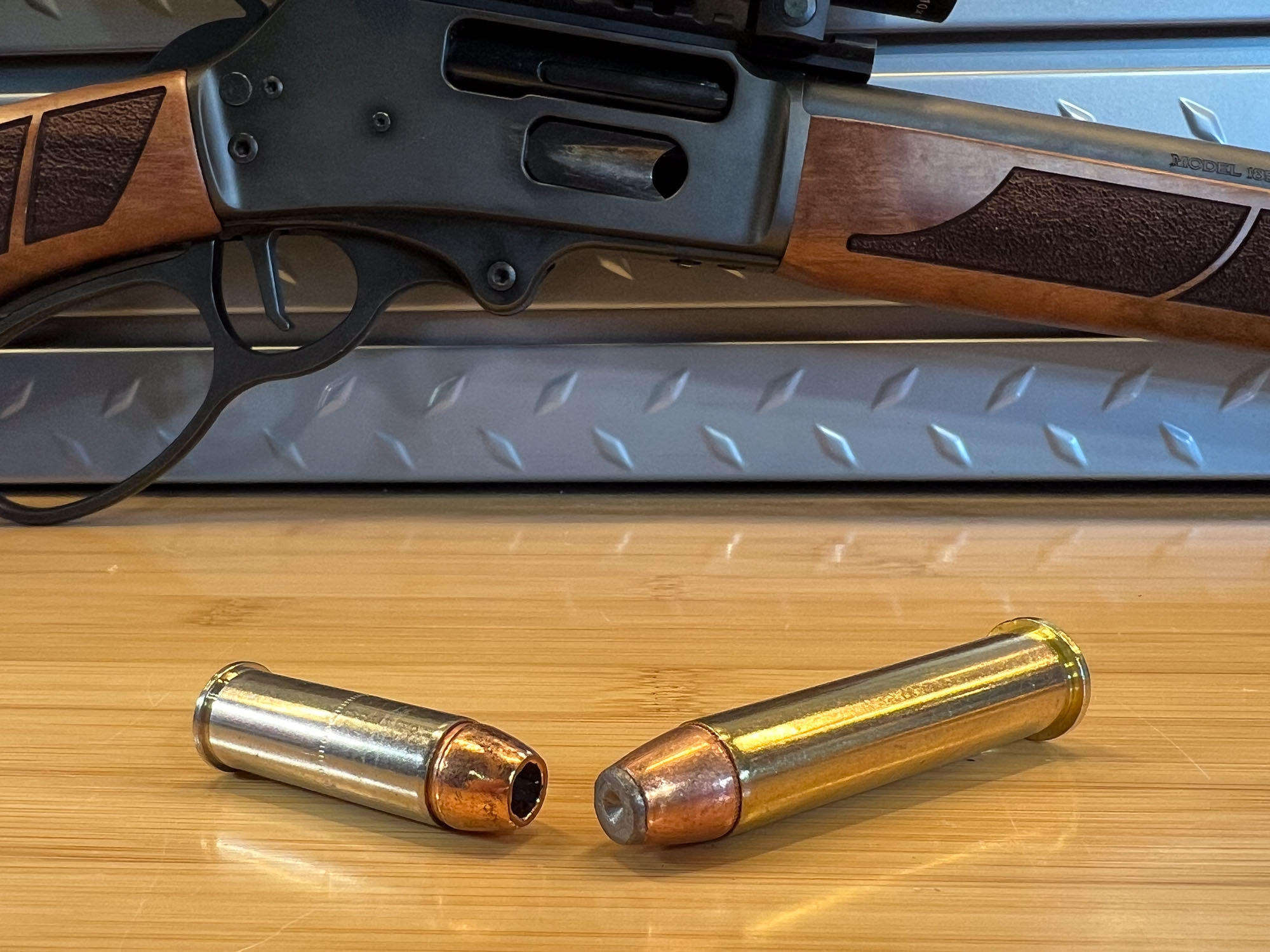
Tremendous Versatility
The breadth of cartridges translates directly into versatility for the lever action. The traditional sweet spot is, of course, hunting deer and other big game. The .30/30 changed the landscape for sportsmen forever thanks to the power it developed with its smokeless propellant. And other cartridges like the .35 Remington, .250 Savage and .300 Savage followed suit.
Over the years we’ve seen more potent developments introduced, especially in the 153-year-old .45/70, that make lever actions viable for African safaris. Similarly, lever guns that take cartridges with pointed spitzer bullets like the .308 Winchester and .223 Remington widened the scope of the platform’s use.
Whether the need is for personal protection, big-game hunting, a portable bug-out or truck gun, or chasing small game there’s a lever action for the job.
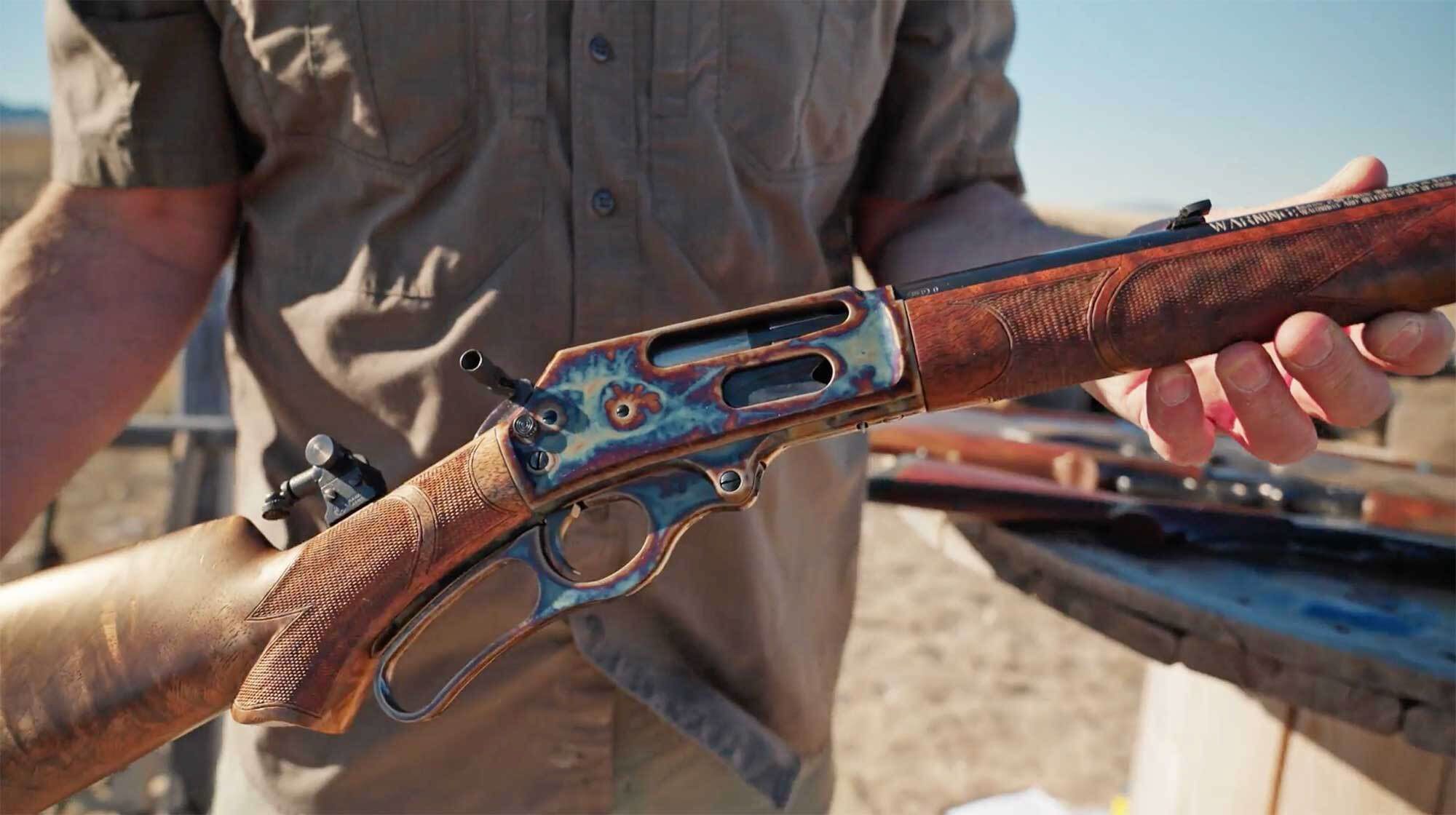
Nostalgia
Even when a lever action isn’t the most practical choice, one cannot argue with the heritage and nostalgia it evokes. Every time I shoulder a lever gun I feel like I’m tapping into America’s gun heritage. That’s a feeling that no modern rifle can provide.
Exceptional Beauty and Elegance
Going hand-in-hand with the lever gun’s nostalgic qualities is its inherently pleasing aesthetic. The rifle’s clean lines and clutter-free silhouette are the epitome of simple beauty. And the flat-sided receivers offer engravers an ideal canvas to showcase their art.
When stocked with high grade walnut and bestowed with well-done bluing and fine engraving there is no rifle that can match a lever action’s looks.

Fine Balance and Handling
While lovely to behold, a lever action’s handling qualities are what really make my heart soar.
Their compact length and even weight distribution make them balanced and nimble. They shoulder quickly and track targets in a nearly effortless manner.
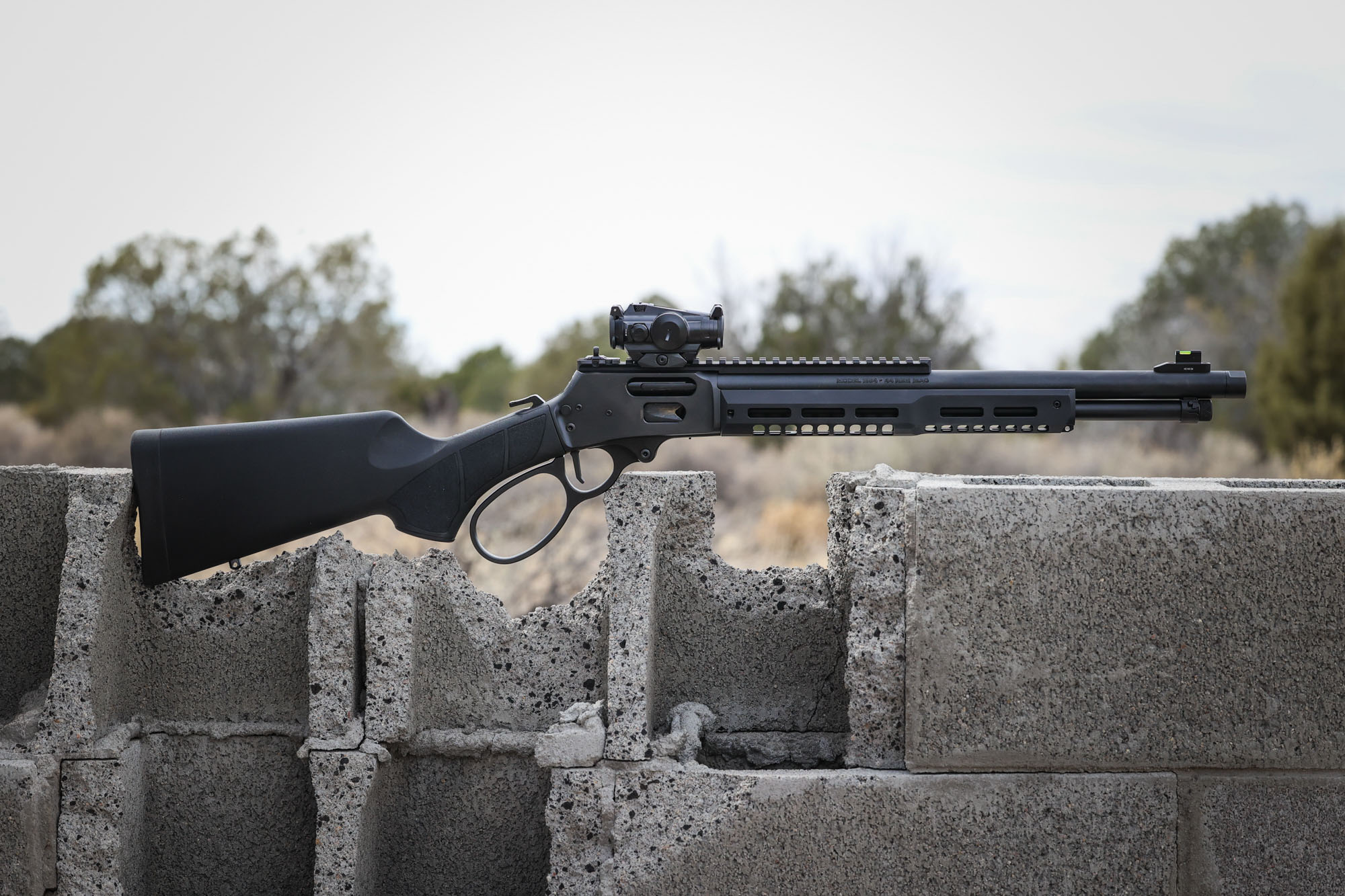
These qualities can be diminished by the addition of scopes, suppressors, lights and other accessories but it doesn’t mean you cannot run modern gear on one.
Red dots don’t add much weight at all and we’re seeing lighter suppressors introduced regularly. Select these components with some thoughtful attention and you can have your cake and eat it too.
Sleek and Portable
Another great benefit of lever actions that follows from their design is how easy they are to carry and transport. The shape of the receiver allows for comfortable one-handed carry in the field and the sleek profile make lever guns a natural choice for a scabbard when hunting on horseback. They slip in and out of gun cases easily and are less prone to snagging than other types of rifles.

New Hunting Opportunities
One of the cooler trends in recent years is states letting hunters use straight-wall cartridges in areas that were previously shotgun-only. This has led to a surge of interest in lever-actions chambered in rounds like .45/70, .360 Buckhammer, .44 Magnum, and others. The high demand for .45/70s in particular is an amazing new chapter in that round’s storied history. It has become a top seller for many ammo makers because of the new straight-wall regs.
States that have expanded their hunting opportunities include Ohio, Iowa, Illinois, Michigan, Indiana, Maryland, West Virginia, Minnesota, Pennsylvania, and Arkansas.
Legal Everywhere
Efforts to restrict firearms ownership persist despite the many gains we’ve seen in recent years with respect to our gun rights. There are still many places where ARs and other semi-autos are banned outright or severely limited and that list is going to get longer this year with legislation in Virginia and Colorado.
To date, lever actions haven’t been subject to the same restrictions and are legal to own pretty much everywhere, making it a great option for personal protection in all 50 states.
Plentiful Sight Options
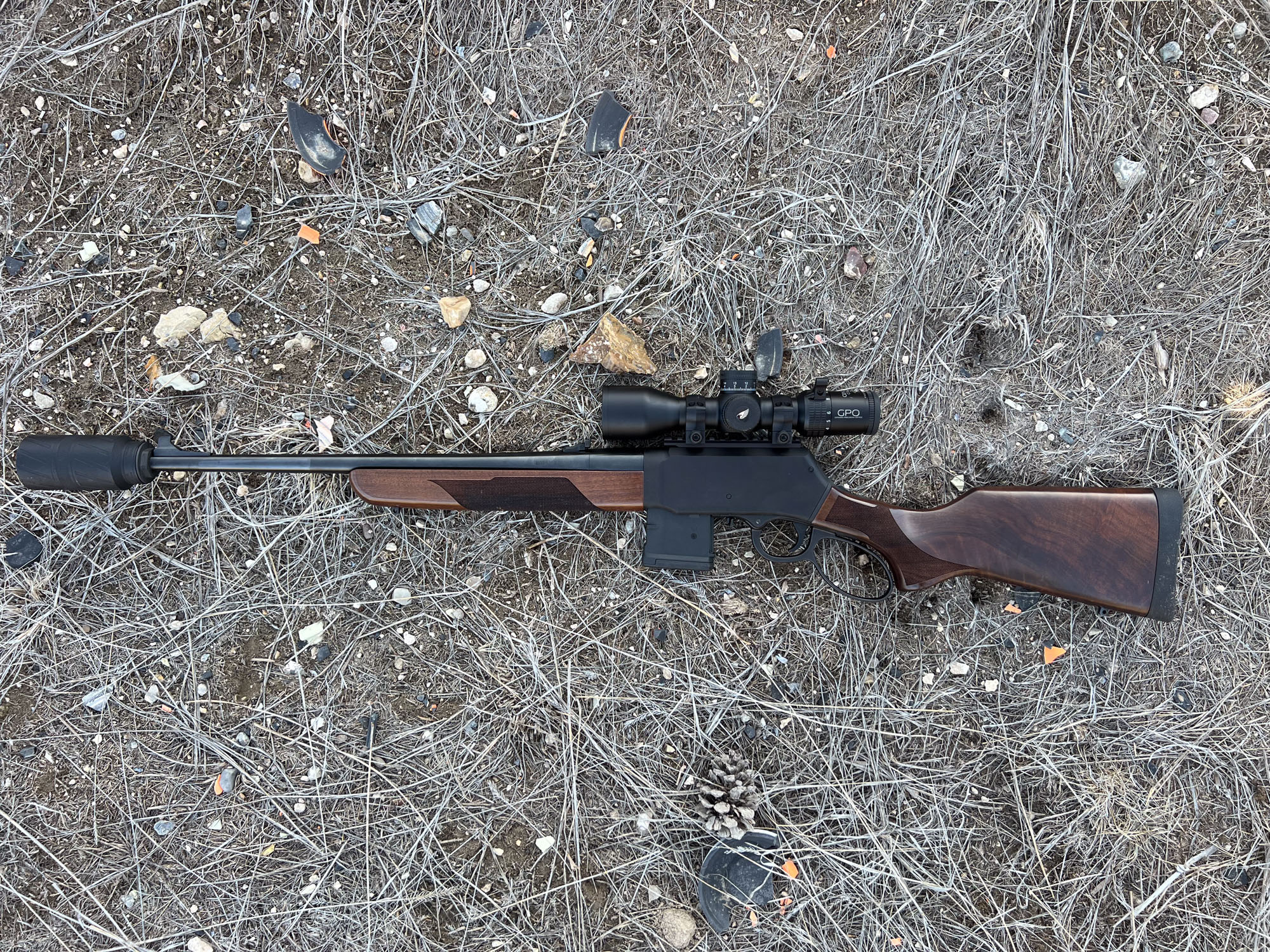
Traditionally lever actions wore iron sights, most commonly buckhorn or semi-buckhorn styles, though peep sights have been mounted on them for many decades. Today, pretty much any type of sight or optic you care to use can work well with a lever action.
Ghost ring sights are among the best for quick shooting in confined spaces — as when following up a wounded animal in thick brush — but there are plenty of red dots and LPVOs to pick for those tasks as well.
For lever actions chambered in rounds like .223 Remington, .308 Winchester and 6.5 Creedmoor there are many compact variable power scopes with magnification ranges between 2X and 16X. These are a great fit.
Podcast: The Time of the Lever Gun Is Now
Why Lever Actions Suck
As I said earlier, lever actions aren’t without their drawbacks. These are the main shortcomings of the platform along with some of the things that have been done to address them.
Outdated Stock Geometry
The iconic lever-action profile has a lot of drop in its stock. This means that the comb is angled downward and is lower at the rear of the stock. There were two reasons for this. One is to better align the eye with open sights mounted low on the receiver. The other is a holdover from the era of matchlocks.
When shooting a matchlock with its exposed pan full of powder the sensible thing to do was to keep your face as far from the fireworks as possible. Extra drop in the stock let the shooter keep their head upright (and farther from the lock) while still being able to use the sights. The idea of putting your face on the stock to improve marksmanship was an innovation that came later.
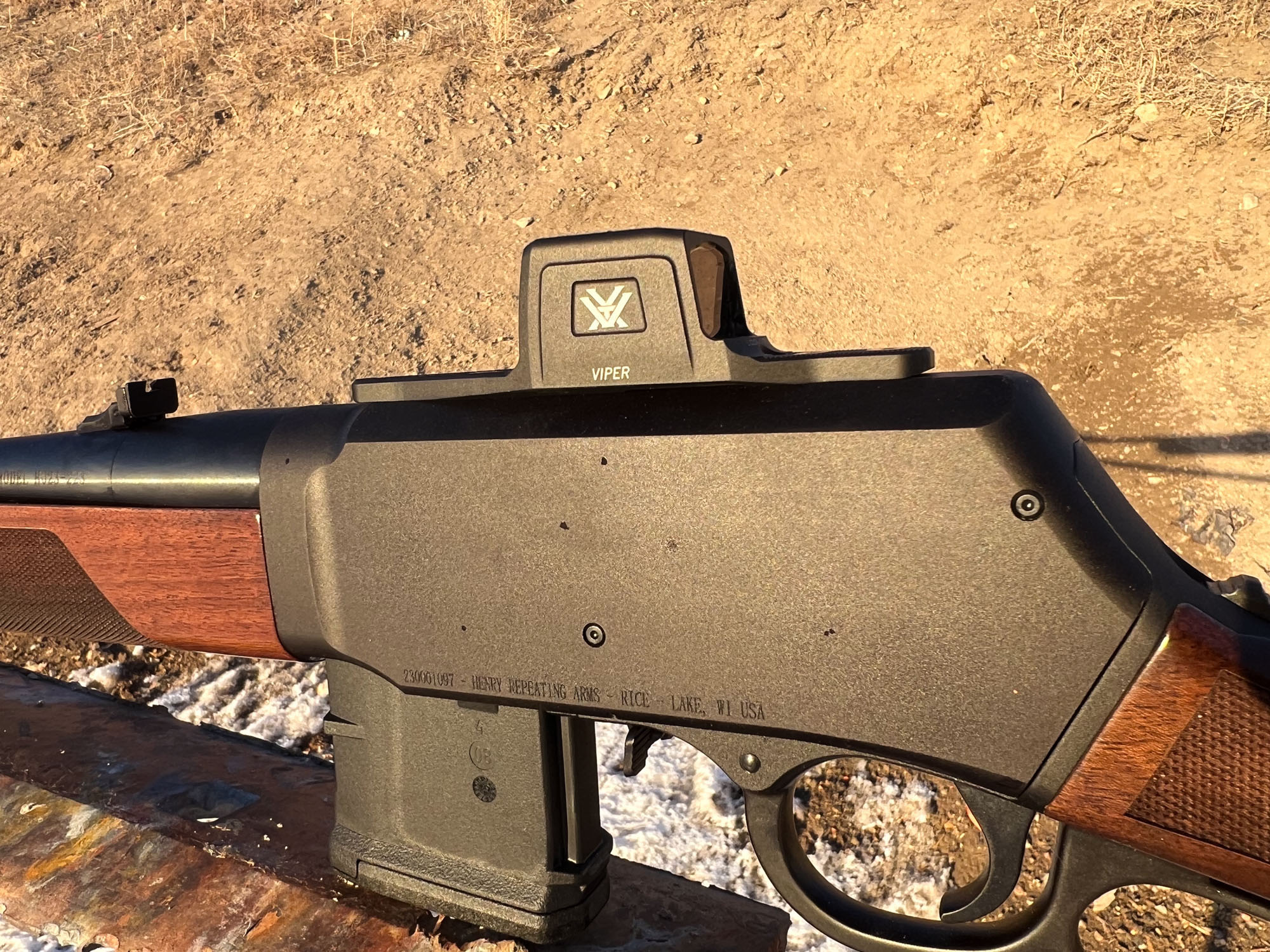
As a result, the traditional stock geometry of a lever gun doesn’t work well with modern optics mounted above the receiver. To look through a scope a shooter needs to float their head above the stock, which is less than ideal.
One can still shoot a lever gun configured this way effectively, of course, but some companies have taken steps to address this. Henry Repeating Arms, for instance, has flatter combs on some of their newer models and we’re seeing red dots with very low profiles on the market. The Vortex Viper has caught on like crazy with shotgunners and lever-action shooters for how simple it is to mount and for how low it sits on the receiver.
Limited Range
A defining feature of today’s shooting scene is the explosion of accurate rifles and cartridges capable of excellent long-range precision. This is the biggest flash point debate in the hunting world. Some people love the advantages these rifles bring, while others decry the trend. Both sides make valid points.
Lever guns pretty much sidestep this issue. The rainbow trajectories of traditional lever gun cartridges and blunt, velocity-shedding bullets greatly limit their effective range. Shots within 100 yards are their sweet spot. Anything beyond 150 yards gets dicey.
Hornady’s early 2000s introduction of their flex-tip (FTX) bullets gave lever guns a big performance boost. These bullets’ pointy tips shot much flatter than traditional lever gun projectiles and extended the effective ethical range of rounds like the .30/30, .35 Remington, and .45/70 Gov’t.
Henry also rolled out their Long Ranger model, which is chambered in .223 Rem., .243 Win., 6.5 Creedmoor, and .308 Win. I’ve found them to be reasonably accurate, making them viable hunting tools out to 300 yards, which is a far cry from what our grandfathers’ lever actions could do.
More Difficult to Accessorize
Everyone loves to dress up their guns, but lever actions generally aren’t as easy to trick out as other platforms. Traditional lever actions lack mounting points for hardware, don’t have stocks that can be adjusted, and sport unthreaded barrels. Models like the Winchester 94 even lack space atop the receiver for mounting optics.
This has been changing lately. We’re seeing more lever actions with fore-ends that have M-Lok slots or sections of Pic rail. Threaded barrels are increasingly common and will only become more so. And we’re seeing some innovative stock systems that are modular and have adjustable dimensions from companies like Magpul and Ranger Point Precision.
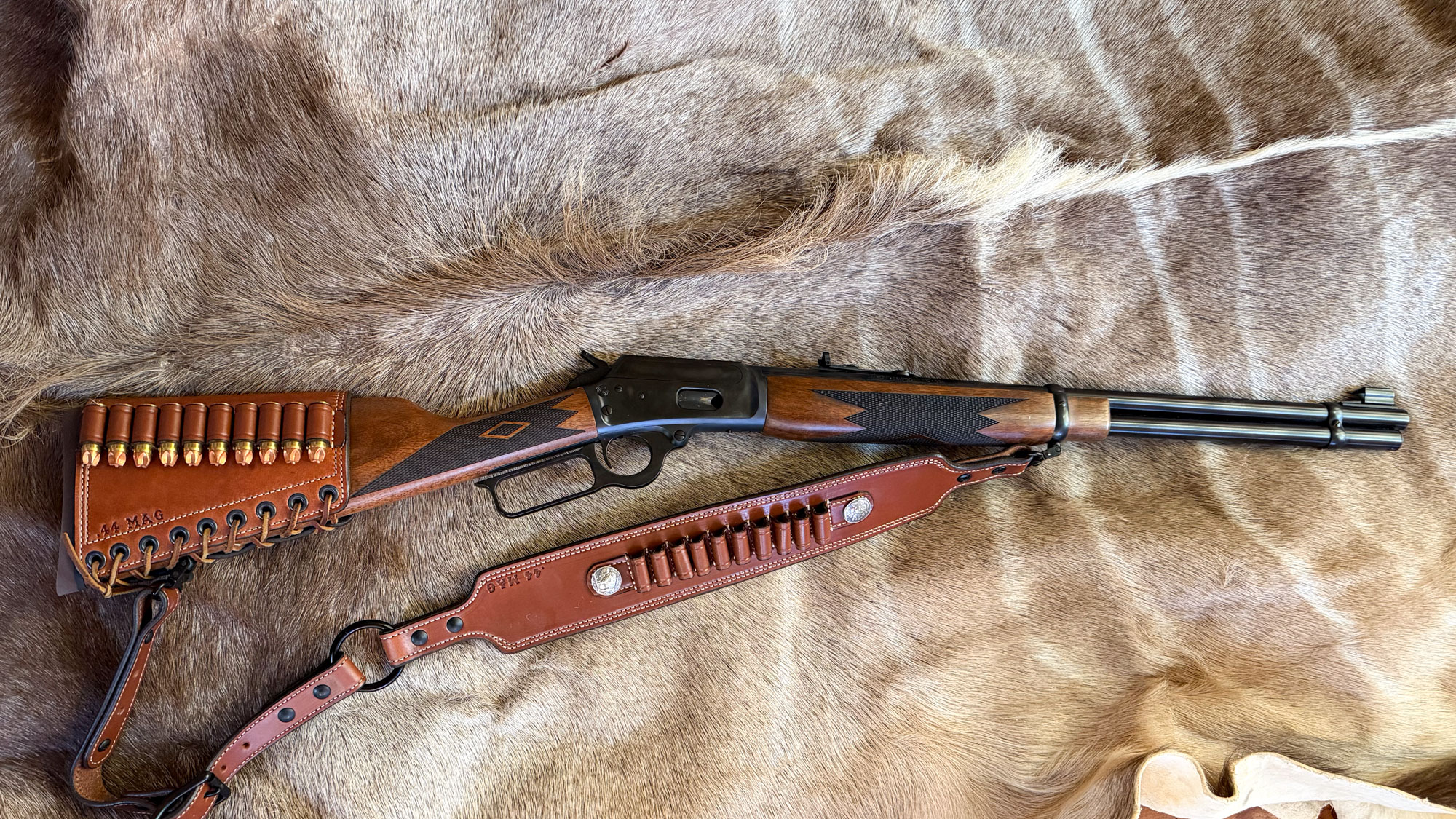
If you prefer traditional looking lever guns and still want to accessorize, you do have options. Busted B Leather based out of Texas makes lovely add-ons for lever actions and other guns. I’ve got one of their hand-tooled butt covers for a Marlin 1894 that has loops for 10 extra cartridges, and a sling that holds an additional 10 rounds. They are beautiful and functional.
Magazine Limitations and Loading Difficulties
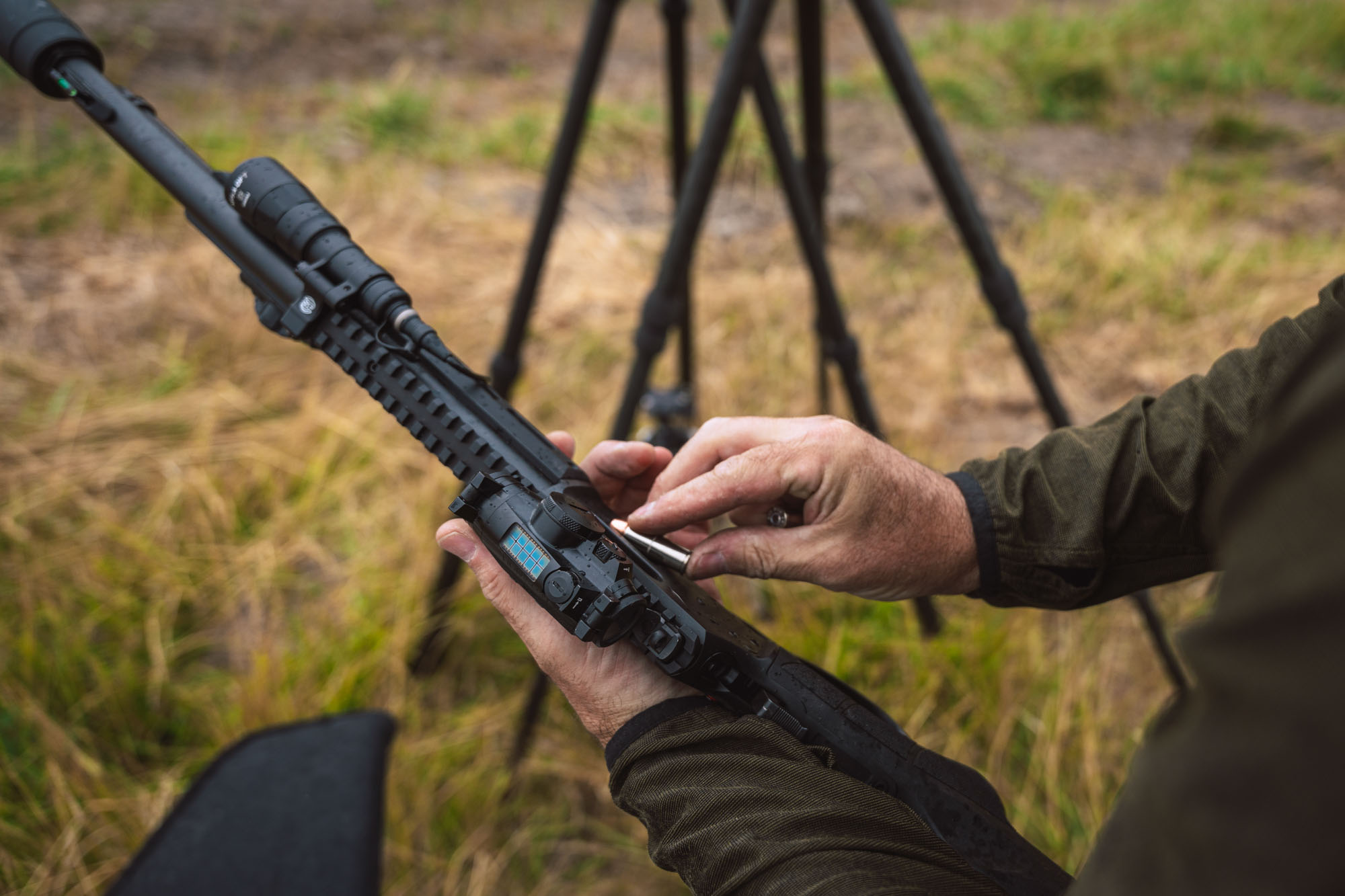
I’m combining these two drawbacks here. With the exception of some rotary magazine systems, the majority of traditional lever actions have tubular magazines under their barrel. The number of rounds a gun can hold is limited by the length of that tube. To load these lever actions you need to push rounds into the side loading gate one at a time, a system that is relatively slow and awkward to master. Others must be loaded through a cartridge-shaped cutout in the magazine tube after removing the inner tube which contains the magazine spring.
In the field these “faults” don’t amount to anything more than a minor inconvenience. You’d be unlikely to need more rounds of .30/30 than a Model 94 could hold. For smaller cartridges like the .44 or .357 Magnums, those tubes have plenty of capacity. This hasn’t prevented companies from trotting out lever actions that run on popular detachable magazines, though.
For example, the new Henry SPD Predator is a .223/5.56 that takes standard AR magazines and has other modern touches like a short 18-inch carbon-fiber wrapped barrel that will help the rifle balance better with a suppressor.
Crossbolt Safeties
I’ve saved the worst for last. My biggest pet peeve is a lever action equipped with a crossbolt safety. They are unnecessary and ugly as sin.
The half-cock system that all crossbolt-equipped lever actions come with is a perfectly fine safety measure. In the intermediate half-cock position the hammer sits in a resting notch that prevents it from engaging the firing pin even if the trigger is pulled.
But, alas, meddling lawyers pushed for crossbolt safeties on many of our most popular lever actions and we’re stuck with them. I’m grateful Henry hasn’t put these safeties on their rifles, but it’s a shame we’ll never see a new Marlin without one.

Final Thoughts on Lever Action Pros and Cons
The tally on this story is nine things that make lever actions awesome compared to six things that suck. In truth, the score isn’t that close.
Many of the lever actions cons have been addressed and mitigated in different ways, while their “pro” qualities continue to shine bright.
I have no intention of abandoning my lever actions and, given the continued popularity and growth of the platform, it’s clear my fellow shooters aren’t either.
Read Next: The Best Lever Action Rifles
It will be interesting to see what the future holds. Commonplace features on today’s lever actions — Pic rails, synthetic stocks, threaded barrels, detachable magazines — were essentially unthinkable 20 years ago. I remember the stir caused by the first laminated stocks that appeared on some Marlins. They made the traditionalists wilt with the vapors, while today no one even bats an eye.
I think we’ll continue to see a widening split in lever action design between the tactical and traditional camps, with plenty of users in each. What the avant-garde tactical guns have in store in the coming decades is anybody’s guess.
The post 9 Reasons Lever Guns Are Awesome (and the 6 Reasons They Suck) appeared first on Outdoor Life.
Whitecounty.com Appreciate the great content from Outdoor L:ife